COMPLETE MISSÕES PARA GANHAR LOYALTY POINTS
ABRA LOOTBOXES E DESBLOQUEIE RECOMPENSAS LENDÁRIAS
NOVOS ITENS EXCLUSIVOS DISPONÍVEIS NA TEMPEST LABS
SUBIDAS DE NÍVEL GARANTEM BÔNUS DE XP
COMPLETE A JORNADA PARA GANHAR CHAVES DE ACESSO
COMPLETE MISSÕES PARA GANHAR LOYALTY POINTS
ABRA LOOTBOXES E DESBLOQUEIE RECOMPENSAS LENDÁRIAS
NOVOS ITENS EXCLUSIVOS DISPONÍVEIS NA TEMPEST LABS
SUBIDAS DE NÍVEL GARANTEM BÔNUS DE XP
COMPLETE A JORNADA PARA GANHAR CHAVES DE ACESSO
COMPLETE MISSÕES PARA GANHAR LOYALTY POINTS
ABRA LOOTBOXES E DESBLOQUEIE RECOMPENSAS LENDÁRIAS
NOVOS ITENS EXCLUSIVOS DISPONÍVEIS NA TEMPEST LABS
SUBIDAS DE NÍVEL GARANTEM BÔNUS DE XP
COMPLETE A JORNADA PARA GANHAR CHAVES DE ACESSO
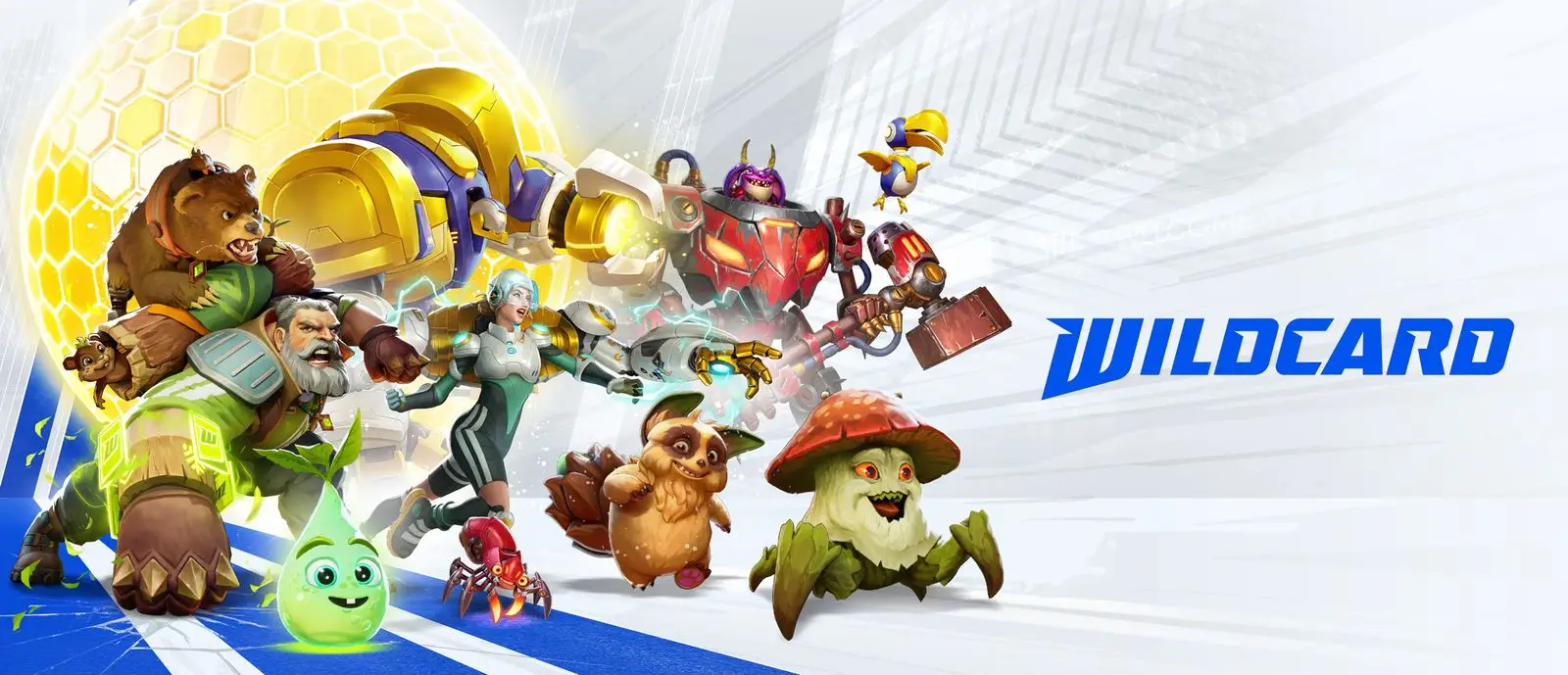
Wildcard
Competition, structured as a system rather than an event
Wildcard is a competitive two-versus-two action card game built around real-time combat, tactical deckbuilding, and persistent tournament infrastructure. It is designed for players who value execution over spectacle and clarity over noise. Every match contributes to a measurable performance record, tracked through leaderboards and reinforced through ongoing competition.
Rather than treating tournaments as isolated moments, Wildcard approaches competition as a continuous environment. Skill is not demonstrated once. It is observed, compared, and refined over time.
About the Game
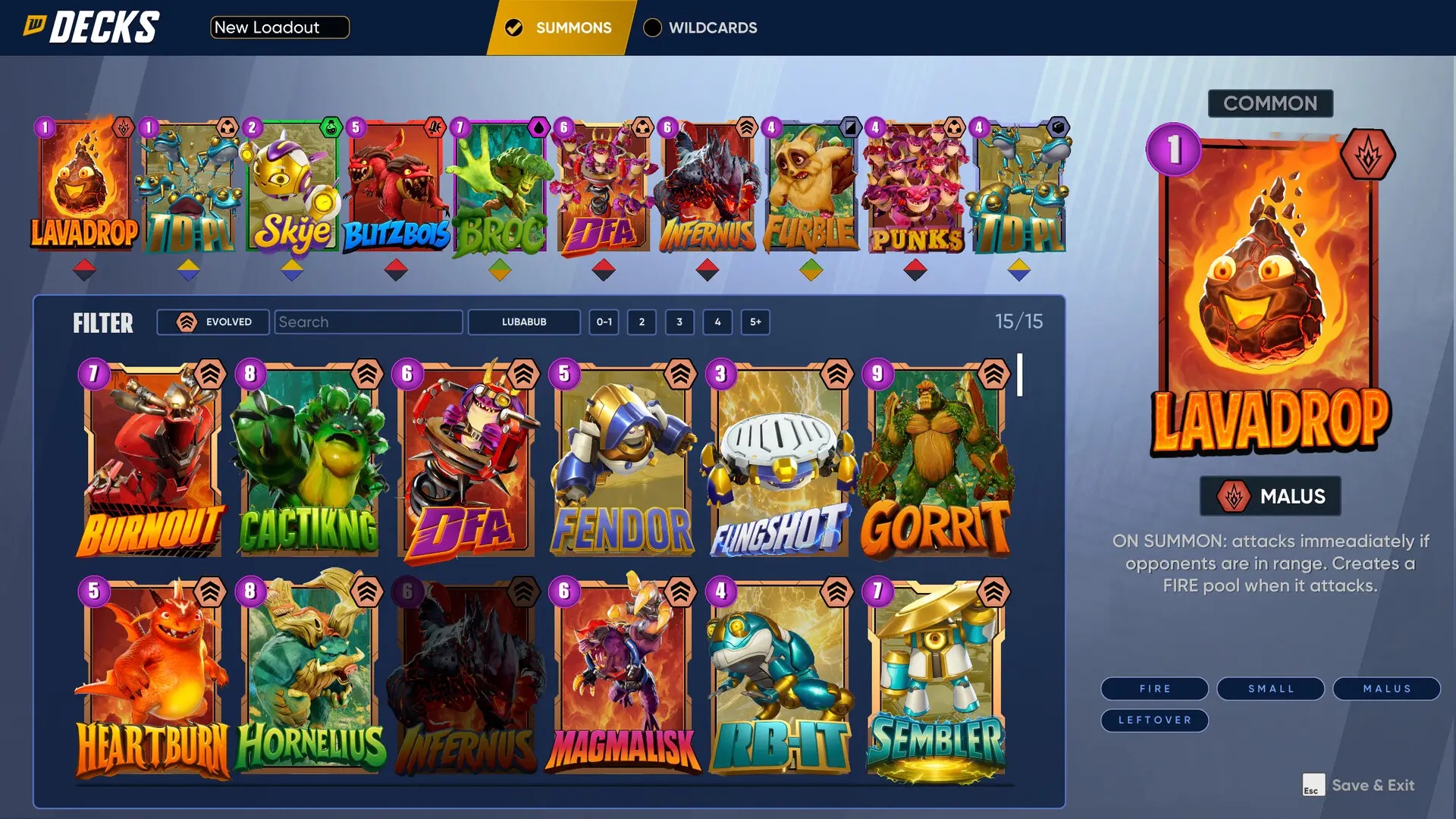
At its core, Wildcard blends fast-paced arena combat with deliberate preparation. Players select a Champion, assemble a deck of summons and Wildcards, and enter structured matches where coordination and decision-making carry as much weight as mechanical precision.
Victory is achieved by breaking through layered defenses and destroying the opposing core. Success depends on timing, resource control, spatial awareness, and the ability to adapt as pressure shifts throughout a match. Strategy does not sit outside the action. It shapes it continuously.
Wildcard is available in Early Access on PC and continues to evolve through balance adjustments, new Champions, and refinements informed by competitive play.
How Wildcard Plays
Each match places two teams into a symmetrical arena designed to reward initiative without forgiving mistakes. Champions define how players interact with the field, while summoned units introduce momentum, disruption, or stability depending on how they are deployed.
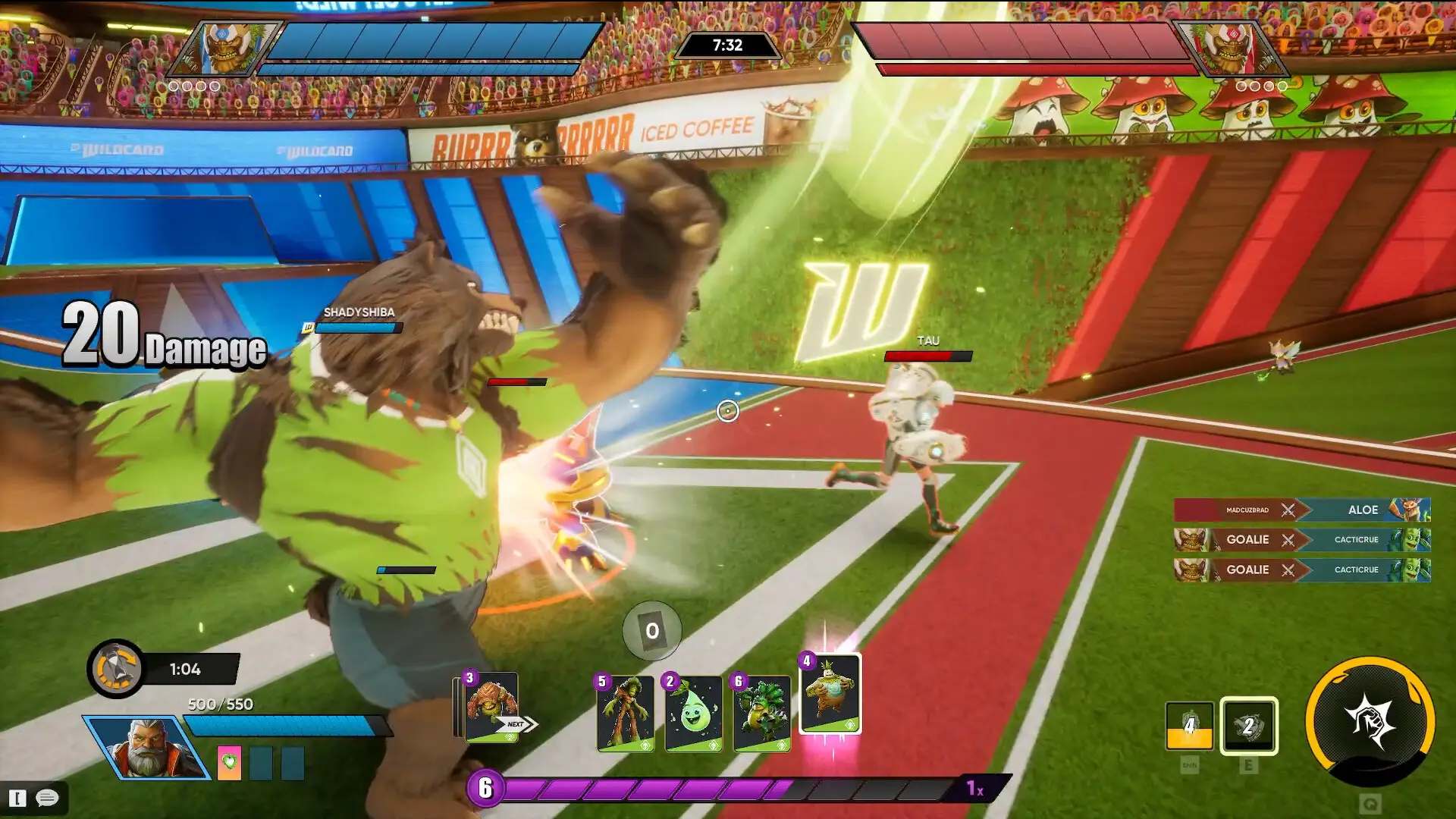
Deckbuilding functions as a declaration of intent. It determines how a team applies pressure, recovers from errors, and responds to opposing strategies. Strong performances emerge when preparation and execution align, not when either stands alone.
Matches favor efficiency over excess. Impact is measured by contribution, not by duration or volume.
A tournament framework that rewards consistency, not proximity
Wildcard’s competitive layer remains active at all times. Matches played in tournament queues are evaluated automatically through a performance scoring system that focuses on meaningful contribution rather than isolated outcomes. Players are not waiting for scheduled brackets or limited entry points. Competition is available whenever they choose to engage.
Daily and weekly tournaments run in parallel, with leaderboards reflecting each player’s strongest performances within defined windows. Scores cannot be inflated through repetition. Standing advances through quality, not quantity.
Reward pools expand alongside participation, reinforcing sustained performance over one-off results. Creator-focused tournaments extend this structure outward, offering curated competitive spaces that surface high-level play without altering the underlying rules.
The Philosophy Behind the System
Wildcard is designed around intentional limits. Entry into competition requires commitment, and scoring systems are shaped to discourage exploitation and low-effort play. These boundaries preserve comparability across the field and ensure that leaderboard positions retain meaning.
Because attempts are finite, decisions carry weight. Performance matters precisely because it is measured under shared constraints.
The Team Behind It
Wildcard is developed by The Wildcard Alliance, a studio committed to building competitive systems that prioritize readability, integrity, and long-term engagement. Development is guided by observed player behavior rather than abstract theory, with Early Access serving as a calibration phase instead of a showcase.
Built on Unreal Engine, Wildcard emphasizes responsive combat and visual clarity, ensuring that high-level play remains legible both to players and spectators. The team maintains an active dialogue with its community, iterating where systems are stressed rather than where attention is loudest.
A competitive game designed to make skill legible
Most competitive games produce moments that vanish once the match ends. Wildcard produces records. Its significance lies in how clearly it translates play into outcomes that persist, accumulate, and remain open to comparison.
By grounding competition in visible scoring and shared evaluation, Wildcard establishes a common language for skill. Players are assessed within the same conditions, by the same measures, over time. Improvement becomes observable. Excellence becomes difficult to imitate without earning it.
Wildcard matters because it turns competition into something that can be read as well as played.