Calamity’s Icebound Season: A Controlled Test of Systems Under Pressure
By Alice
10 months ago
A Season Measured in Consequence
Icebound Season is not structured as a beta, nor does it behave like a seasonal content update. It is a systems test designed to observe how Calamity’s assumptions perform when progression, competition, access, and incentives collide at the same time. Running from December 19–23, the season introduces constraint. Time is limited. Rankings are visible. Rewards are finite. Decisions carry weight because the window closes. Icebound Season is not asking whether players will engage. It is examining how they behave when permanence is removed.
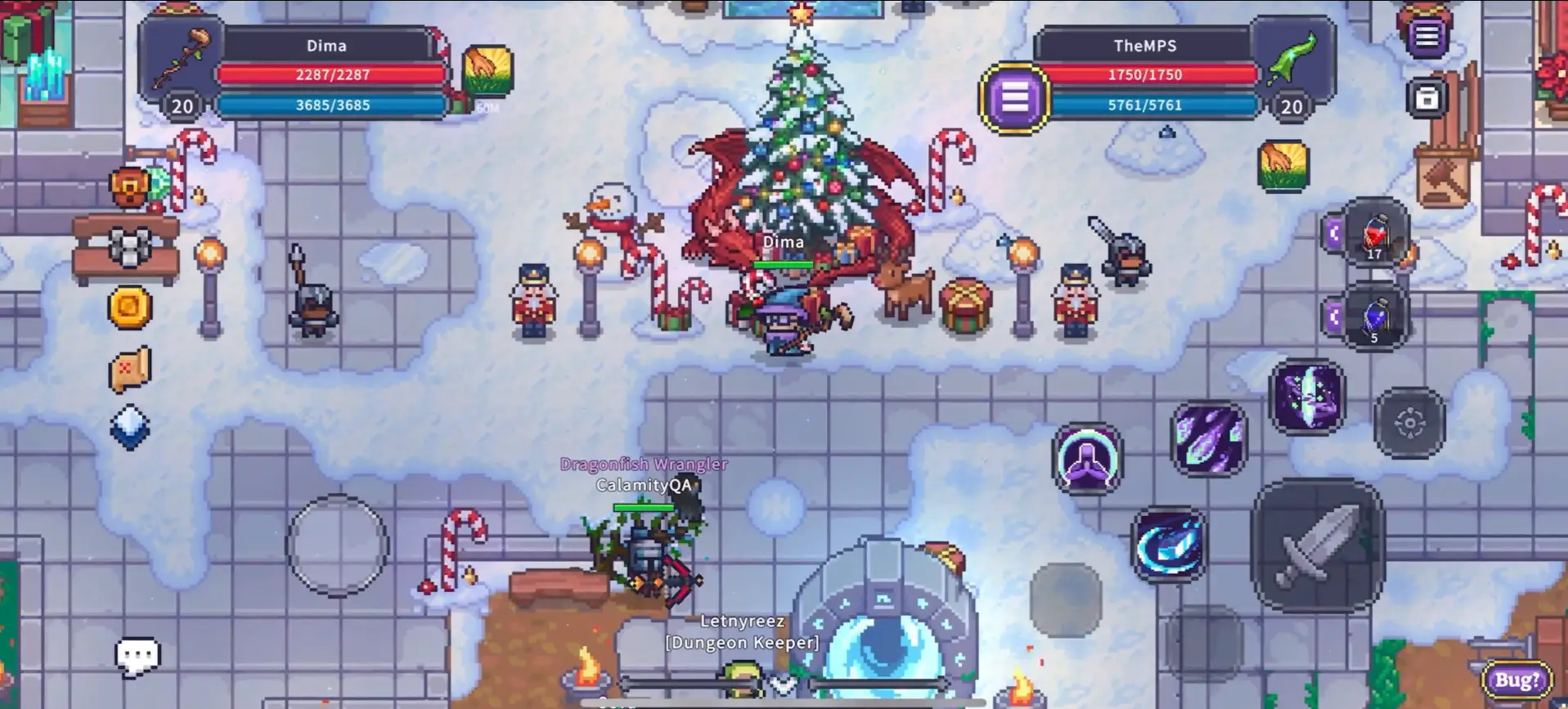
This distinction matters. Many Web3 tests seek participation. This one seeks pressure. That pressure is reinforced by exclusivity. Icebound Season introduces titles and cosmetic rewards that can only be earned during the event window. These are not evergreen unlocks. They are markers of presence, designed to test how identity and scarcity intersect when progress is explicitly temporary.
When Every Path Competes for Meaning
Calamity frames Icebound Season as a complete seasonal loop rather than a feature rollout. PvE progression, competitive PvP, guild activity, and social contribution exist in parallel, competing for attention within the same environment. There is no prescribed path. Incentives are left to do the guiding. This mirrors live service MMO design more than typical Web3 deployments, where mechanics often arrive in isolation. The difference is intent. Icebound Season is not meant to showcase potential. It is meant to expose what only appears when everything is live at once.
That exposure extends into the PvE layer itself. Dungeon progression and difficulty logic have been actively reworked for the season, with tighter balance controls and structural caps designed to limit exploitative behavior. Valor point distribution and dungeon medal accumulation are constrained deliberately, shaping how far optimization can be pushed before diminishing returns appear.
These are not cosmetic adjustments. They are behavioral levers. What emerges under those conditions is more informative than any roadmap.
3v3 PvP: Steel Tempered in Visible Rank

The 3v3 PvP arena is not positioned as a headline attraction. It functions as a stressor. Competitive systems compress imbalance and accelerate optimization. They reveal friction faster than cooperative loops ever do. By embedding ranked PvP inside a seasonal economy, Calamity is testing how skill-based competition reshapes player priorities and resource flow under visible pressure. Ranking is not abstract here. It is public, finite, and directly tied to seasonal outcomes.
The value of the arena lies less in participation metrics and more in what it distorts once incentives are aligned. If competitive play pulls value away from other systems, that signal is immediate. If it destabilizes progression or reward distribution, the fracture is visible.
If something breaks here, it breaks loudly.
A World Divided Without Breaking
Equally important is what Icebound Season keeps separate. Core gameplay does not require a wallet. Players can enter, progress, and compete without interacting with blockchain infrastructure.
Alongside this, Calamity operates parallel zones tied explicitly to ownership, including the Factory Zone and the Dragon Hall. These spaces sit adjacent to the core loop rather than inside it. They do not gate progression. They layer differentiated access on top of a fully playable game.
Icebound Season is testing whether on-chain value can exist without bleeding into moment-to-moment gameplay. That test extends beyond access into persistence. Cosmetic rewards earned during the season can later be minted on-chain, but only after the event concludes. Ownership is deferred, optional, and disconnected from immediate play.
The answer will not be theoretical. It will be visible in how players move between systems.

Incentives, Accessibility, and What Becomes Visible
Seasonal leaderboards distribute rewards across multiple forms of engagement rather than collapsing value into a single dominant metric. Progression, conquest, guild participation, referrals, sponsorship leadership, and creative contribution all feed into seasonal outcomes. Icebound Season’s reward architecture is intentionally layered. A multi-million WYRM pool is distributed across these categories alongside gold rewards, NFT drops, and Factory-linked incentives. This breadth is not generosity. It is instrumentation, designed to observe where effort concentrates when value is fragmented rather than centralized.
Scholarships now operate independently of guild structures, reducing centralized control over access and limiting organizational dominance within a finite season. At the same time, playable builds on Android and iOS lower friction and expand participation under the same competitive constraints. Mobile access is not treated as a milestone. It is treated as a variable. It changes who participates, not just how many. In a season designed to surface behavior, that distinction matters.
All of this unfolds within the explicit context of an alpha technical playtest. Instability, bugs, and even rollbacks are acknowledged as part of the process. Icebound Season does not hide its fragility. It incorporates it into the test.
Why Icebound Season Is Worth Watching
Icebound Season is not a launch and it is not a promise. It is an attempt to see whether a hybrid MMO can operate under real constraints, real incentives, and real player behavior without losing coherence.
It does not claim to resolve the tensions at the center of Web3 game design. It creates conditions where those tensions become visible.
For observers, that alone makes Icebound Season worth attention. Not because it guarantees success, but because it makes failure legible.